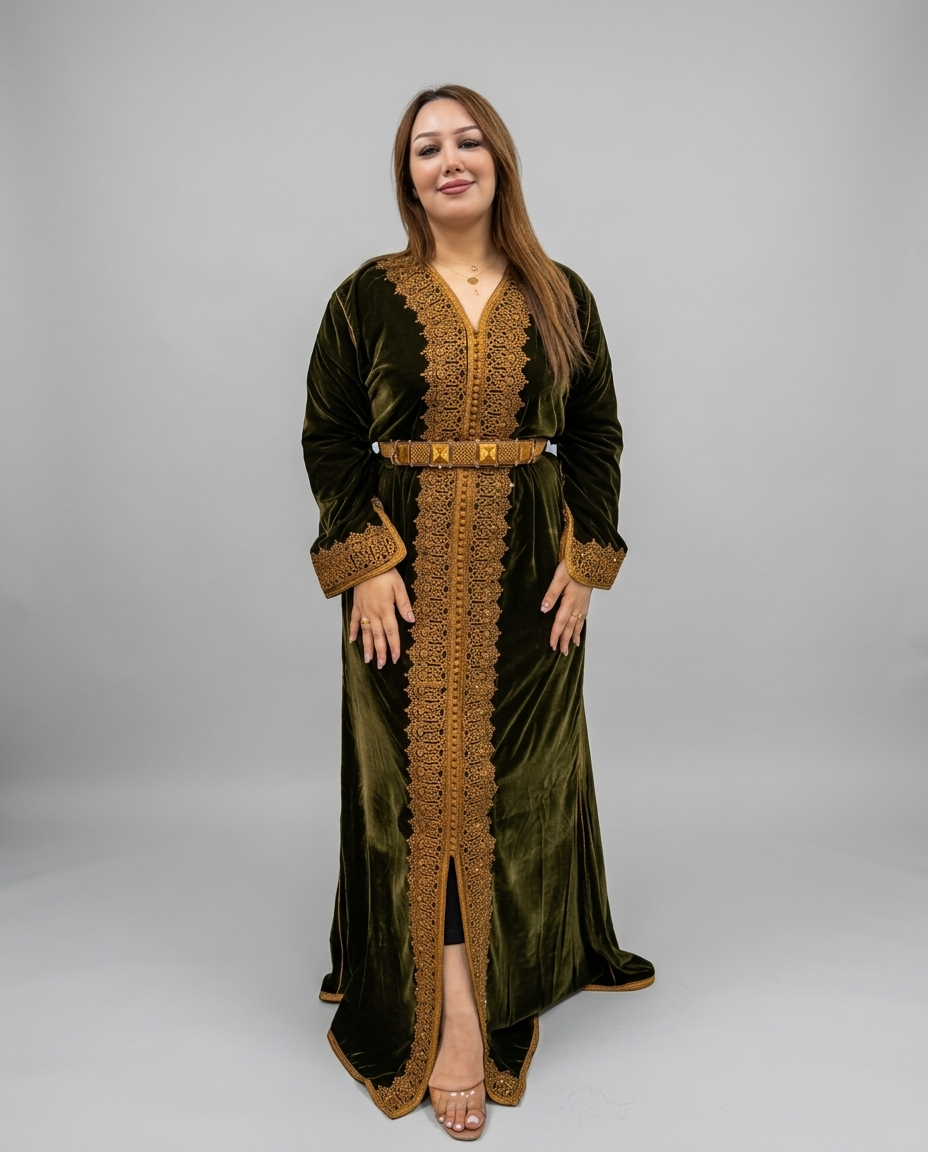
Caftan vs Takchita vs Kaftan: The Differences Every Shopper Needs to Know Before Buying
You spent weeks searching for the perfect dress for a Moroccan wedding, finally ordered what you thought was a takchita, and it arrived as a single-layer caftan with no underlayer in sight. If this has happened to you — or if you are trying to avoid it — you are in the right place.
Most fashion sites use these words interchangeably, and that is exactly why so many women end up with the wrong dress for their event. The difference between caftan and takchita is not just a matter of spelling or regional preference. It is a structural, cultural, and stylistic distinction that directly affects how you look, how you dress, and what occasion you can wear it to. The same confusion extends to the word "kaftan," which adds another layer of uncertainty for shoppers outside Morocco.
This post breaks down each term clearly, explains what separates them, and helps you make a confident choice before you buy.
What Is a Caftan? Understanding the Moroccan Original
The Moroccan caftan is a single-piece, full-length robe traditionally made from luxurious fabrics such as velvet, silk, satin, or brocade. It is one of the most iconic garments in Moroccan fashion history, worn by women for centuries during celebrations, religious holidays, and everyday elegant occasions.
A caftan is defined by its one-piece construction. It is worn on its own, cinched at the waist with a belt — called an mdamma or ceinture — and fits the silhouette as a complete outfit. The design can range from heavily embellished with hand-stitched embroidery and beading to relatively minimal, depending on the occasion and the region it comes from.
What makes a caftan feel complete is the belt. This is not an afterthought. The right belt transforms the silhouette, marks the waistline, and adds the level of formality the look requires. If you already own a caftan or are styling one, choosing a quality belt is as important as the dress itself.
At YourCaftan, the Caftan – Golden Sahara Belt (Gold Color Edition) was designed precisely for this purpose. Priced at $36.37 and available in Green, Blue, Gold, and Red, it features sparkling rhinestones and elegant tassels that reflect light beautifully. It was crafted in Morocco specifically to complement caftans, wedding dresses, and Arabic robes — not a generic fashion belt repurposed for Moroccan wear.
What Is a Takchita? The Two-Piece Distinction That Changes Everything
Here is where the difference between caftan and takchita becomes critical. A takchita — sometimes spelled tackchita or takshita — is a two-piece ensemble. It consists of a first layer called the tahtiya (the underlayer), which is typically simpler in construction and acts as a base, and a second decorative outer layer called the fouqia, which is the showpiece.
The outer layer is usually open at the front, fastened with decorative buttons called sfifa and aakad — traditional Moroccan closures made from hand-braided silk cord and small knots. This layering is what distinguishes the takchita visually and physically from a single-piece caftan.
Because of its layered, more elaborate construction, the takchita is traditionally considered more formal than a standard caftan. It is the dress of choice for Moroccan weddings, engagement parties (khotba), and significant celebrations. The bride's guests often wear takchitas, while the bride herself may wear multiple outfit changes throughout the ceremony — each more ornate than the last.
If a product listing does not specify whether a garment has an underlayer, ask before you buy. This single detail determines whether you are purchasing a caftan or a takchita.
Kaftan vs Caftan: Are They Actually the Same Word?
This question causes a surprising amount of confusion, and the short answer is: mostly yes, but context matters.
"Kaftan" is the broader, internationally used spelling. It covers a wide range of loose, long robes worn across Central Asia, the Middle East, North Africa, and even Western fashion. When a European or American fashion brand sells a "kaftan," they are typically referring to a loose, flowing cover-up or resort-wear garment — often lightweight, minimally structured, and far removed from Moroccan tradition.
"Caftan" with a C is the spelling most closely associated with the Moroccan tradition specifically. Within Morocco, the caftan is a cultural artifact with specific construction standards, regional embroidery styles, and ceremonial significance.
So while the words share an origin, "kaftan" in a global fashion context and "caftan" in a Moroccan context describe garments that can look and function very differently. When you are shopping for a Moroccan occasion, always look for "caftan" or "takchita" to ensure you are getting a garment rooted in the correct tradition — not a resort sundress.
How the Belt Tells You Which Dress You Are Wearing
One underappreciated insight: the style of belt worn with a Moroccan dress is often your clearest visual signal of what type of garment you are looking at — and how formal the occasion is.
A simple caftan might be worn with a narrower, understated belt. A takchita worn to a wedding will almost always be paired with a wide, ornate belt featuring metallic finishes, arabesque patterns, or intricate filigree — because the whole point of the takchita is its layered grandeur. The belt anchors the outer layer and creates that characteristic hourglass silhouette.
This is why YourCaftan's belt collection is worth examining closely, not just as an add-on, but as a tool for understanding the formality level of your look.
The Caftan – Royal Sultana Bridal Belt at $58.99 is a strong example of a wedding-grade belt. Its radiant metallic finish and intricate Arabesque filigree are precisely the kind of detail associated with takchita styling at a formal Moroccan ceremony. It comes in three color combinations — gold red, gold white, and gold green — to coordinate with the outer layer of a takchita or elevate a single-piece caftan to bridal-level presentation.
For a slightly more geometric aesthetic, the Caftan – Moroccan Prestige Octagon Belt at $37.99 offers a unique octagonal hollow pattern with engraved detailing and a rope design that adds a traditional touch. Available in Golden Red, Golden Green, and Golden White, it works well with both caftan and takchita styling depending on the formality of the embellishment on the dress itself.
Choosing the Right Style for Your Event
Now that the difference between caftan and takchita is clear, the next question is practical: which one do you actually need?
For a Moroccan wedding as a guest: A takchita is the expected choice. The two-layer construction signals respect for the occasion and aligns with what other guests will be wearing. If you can only source a caftan, choose one with heavy embellishment and pair it with a statement bridal belt to match the formality level.
For an engagement party or khotba: Either a takchita or a dressed-up caftan works well here. The key is the level of embroidery and the quality of your accessories, particularly the belt.
For Eid celebrations or family gatherings: A single caftan is perfectly appropriate and often preferred for its ease of wear. Choose lighter fabrics and simpler belts for daytime events.
For Western occasions with a Moroccan aesthetic: A kaftan in the broader sense — lighter fabric, looser fit — may be more practical and comfortable, especially in warmer climates or outdoor settings.
Understanding the difference between caftan and takchita means you are not just choosing a dress. You are choosing the right level of formality for your specific moment.
FAQ
Q: What is the main difference between caftan and takchita? A: A caftan is a single-piece full-length garment, while a takchita is a two-piece ensemble made up of a plain underlayer and an ornate outer layer fastened with traditional Moroccan closures called sfifa and aakad. The takchita is generally considered more formal.
Q: Can I wear a caftan to a Moroccan wedding? A: Yes, but it depends on the caftan. A heavily embellished caftan paired with a high-quality bridal belt can meet the formality of a Moroccan wedding. However, a takchita is the more traditional and expected choice for wedding guests in Morocco.
Q: Is kaftan the same as caftan? A: The words share the same origin, but "kaftan" is used internationally to describe a wide range of loose robes across different cultures, often including lightweight resort wear. "Caftan" with a C refers specifically to the Moroccan tradition, with its own construction standards and cultural significance.
Q: Do I need a special belt for a takchita? A: Yes. The belt is a central part of the takchita's formal look. A bridal-style belt with metallic finish, arabesque patterns, or rhinestone detailing is standard for wedding and ceremony wear. A basic or narrow belt will visually undercut the formality of the takchita's layered construction.
Make the Right Choice Before You Buy
The difference between caftan and takchita is not a technicality. It is the difference between arriving at a Moroccan wedding dressed appropriately and arriving in the wrong dress entirely. Once you know what you are looking for — single layer versus double layer, casual occasion versus formal ceremony, belt weight versus dress embellishment — the shopping process becomes significantly less stressful.
At YourCaftan, the jewelry and belt collection is built around Moroccan tradition, not generic fashion trends. Whether you are completing a caftan look or accessorizing a full takchita ensemble, browsing the Moroccan Caftan Jewelry & Traditional Jewelry collection is the most direct way to find accessories that were actually designed for the garments you are wearing.
Shop with confidence. Dress for your occasion. And never show up in the wrong dress again.