Picture this: you walk into a henna night wearing a full double-layered takchita with a headdress, a ceremonial belt, and embroidered sleeves that touch the floor — and then you realize you are a guest. Not the bride. This happens more often than anyone talks about, and it creates an awkward moment that no amount of henna artistry can cover.
The henna night (laylat al-henna) holds a specific place in Moroccan celebration culture. It is joyful, intimate, and deeply feminine — but it is not the wedding. It is not even the closest event to the wedding in terms of formality. Yet season after season, guests and even close family members show up dressed for the ceremony of a lifetime when the occasion calls for something far more considered.
This post is here to fix that.
What the Henna Night Actually Is — and What It Is Not
The henna night is a pre-wedding gathering, typically held among women only or close mixed company, centered around music, sweets, candles, and the ritual application of henna to the bride's hands and feet. It is celebratory and traditional, but its energy is warm and intimate — closer to a ceremonial dinner than a royal procession.
The bride wears the full takchita. That is her moment, and that distinction matters enormously in Moroccan culture. When guests arrive in equally elaborate bridal-level dress, they blur a boundary that the event is specifically designed to honor. The unspoken visual hierarchy of the evening collapses, and the bride's entrance loses its weight.
What guests are actually expected to wear is elegant but calibrated — a single caftan, not a double-layered takchita, in rich color or refined embroidery that signals effort and respect without competing with the central figure of the night.
Rank your Shopify store on Google, get cited by ChatGPT and Claude. 20 free SEO posts a month. Install EmergeRank.
Get EmergeRank free →The Most Common Mistake: Confusing Formality with Elegance
There is a widespread assumption that more layers, more embellishment, and more structure automatically mean more appropriate. This is the core of the overdressing problem.
A heavily structured takchita with a contrasting inner layer and full accessories reads as bridal. A single, beautifully crafted caftan with sfifa trim and thoughtful detail reads as cultured. One says I am the event. The other says I understand the event.
This distinction — between performing formality and expressing genuine elegance — is something Moroccan women who grew up attending these occasions absorb naturally. For women dressing for their first henna night, or dressing in a diaspora context where these nuances sometimes fade, it is worth stating plainly: the goal is to look beautifully dressed, not ceremonially dressed.
What to Actually Look for in a Caftan for Henna Night
A well-chosen caftan for henna night sits at the intersection of tradition and wearability. Here is what to prioritize:
Fabric and silhouette: A flowing single-layer caftan with a graceful silhouette reads correctly for the occasion. You want movement and richness without structural rigidity.
Embroidery and sfifa: Traditional Moroccan embroidery and sfifa trim are entirely appropriate — encouraged, even. They signal that you understand the cultural context and dressed with intention. The key is that these details should enhance the garment, not overwhelm it.
Color: Henna nights lean into warm, jewel-toned, and celebratory palettes. Deep greens, rich pinks, royal purples, and warm whites all work beautifully. The one color most guests traditionally avoid is white in a bridal context — though soft whites or ivory in clearly non-bridal silhouettes are often worn without issue.
Accessories: Keep them present but restrained. A refined belt can elevate a caftan significantly without pushing you into bridal territory.
The Caftan – Royal Sfifa Couture 2026 at $230 is a strong example of exactly this register. It features handcrafted sfifa and rich embroidery in a graceful single-caftan silhouette, available in White, Blue, Red, Pink, Light Blue, and Purple. The embroidery is couture-level, but the form is entirely appropriate for a guest — dressed beautifully, not ceremonially.
For women who prefer a fully handmade option with exceptional artisan detail, the Caftan – Majestic Handmade Caftan at $270 brings intricate sfifa work and refined finishing in Pink and Beige, with sizing from S through 2XL. The craftsmanship here communicates genuine appreciation for Moroccan tradition, which is exactly the message a thoughtful henna night guest wants to send.
How Accessories Change the Equation
One of the most underused tools for calibrating a henna night look is the belt. A well-chosen caftan belt does two things simultaneously: it adds visual formality and polish to a simpler caftan, and it gives you control over how dressed-up the overall look feels.
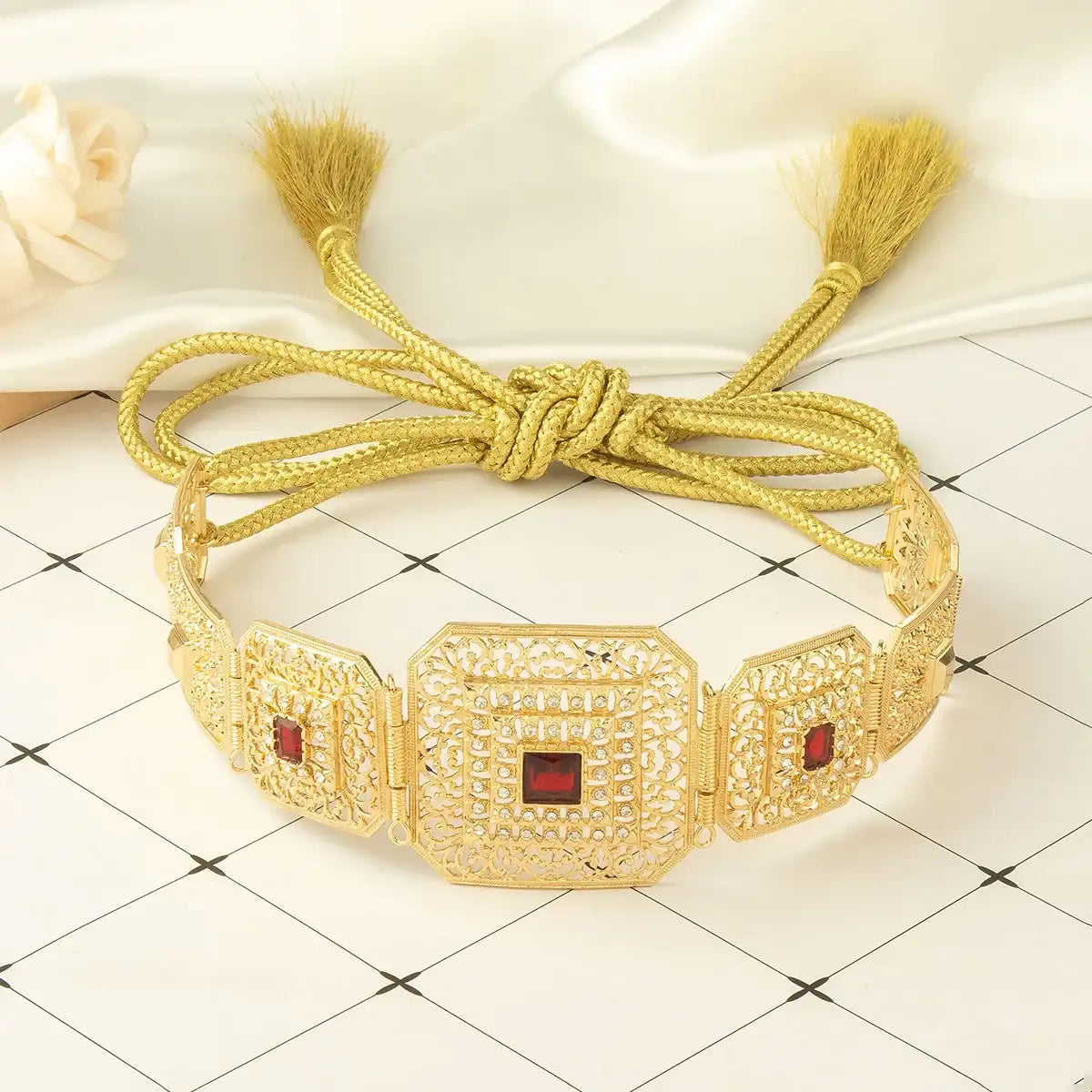
The Caftan – Royal Sultana Bridal Belt at $58.99 features a radiant metallic finish with intricate Arabesque filigree — a genuinely elevated piece available in gold-red, gold-white, and gold-green at 110cm. Paired with a single caftan like the Sfifa Couture, it creates a look that is rich and intentional without reading as bridal.
This is actually where the overdressing problem often originates: women add a belt and a takchita and a headdress, stacking accessories that each individually would be appropriate but collectively push the look into ceremony territory. The answer is not to remove all accessories — it is to choose deliberately rather than accumulatively.
Reading the Room: Guest vs. Close Family vs. Bridal Party
Not everyone attending a henna night holds the same position, and dress should reflect that.
A guest who is not immediate family can comfortably wear a caftan for henna night in the $200–$300 range with moderate embellishment and understated accessories. The goal is to look polished and culturally engaged.
A close family member — a sister, aunt, or close cousin of the bride — may dress slightly more elaborately, particularly if the family has coordinated looks. Even then, a single caftan with richer embroidery rather than a full takchita is typically the appropriate step up.
Members of the bridal party who are specifically asked to wear matching or complementary looks operate by different rules — but that direction should come from the bride or her family, not from personal initiative.
If you are unsure which category you fall into, the safest and most graceful approach is always a single, beautifully crafted caftan with intentional accessories. You will never be out of place.
FAQ
Q: Can I wear a takchita to a henna night if I am not the bride? A: In most Moroccan traditional settings, a full takchita is considered bridal-level attire. Wearing one as a guest can unintentionally draw attention away from the bride. A single caftan with rich embroidery is the culturally appropriate and more elegant choice for guests.
Q: What colors are appropriate for a caftan for henna night? A: Jewel tones such as deep green, purple, royal blue, and rich pink are all celebratory and appropriate. Warm reds and soft whites can work depending on the specific context and the bride's palette. The main consideration is choosing a color that feels festive without mimicking the bride's look.
Q: Is it appropriate to wear a caftan belt to a henna night? A: Yes — a belt can be a beautiful finishing touch that elevates a single caftan appropriately for the occasion. A piece like the Caftan – Royal Sultana Bridal Belt with its Arabesque filigree metallic finish adds elegance without pushing the look into bridal territory.
Q: How much should I expect to spend on a henna night caftan? A: A mid-range caftan in the $200–$300 range offers genuine craftsmanship and traditional detail appropriate for the occasion. Pieces like the Caftan – Royal Sfifa Couture 2026 at $230 or the Caftan – Majestic Handmade Caftan at $270 represent excellent options — handcrafted, traditionally detailed, and priced for real women rather than runway budgets.
Dress With Intention, Not Ambition
The henna night is one of the most beautiful moments in the Moroccan wedding tradition. It is intimate, musical, and rich with meaning. Dressing well for it is an act of respect — for the bride, for the occasion, and for a culture that has refined its celebration aesthetics over generations.
The right caftan for henna night is not the most expensive piece in your wardrobe or the most layered. It is the one chosen with awareness of what the evening actually is. That awareness, expressed through a beautifully crafted single caftan, refined embroidery, and considered accessories, is what genuine elegance looks like in this context.
Browse the full collection at YourCaftan and find the piece that says exactly what you want it to — gracefully, intentionally, and in unmistakably Moroccan style.